Home Blog Page 45

BLA launches coordinated attacks on Pak Army in POB

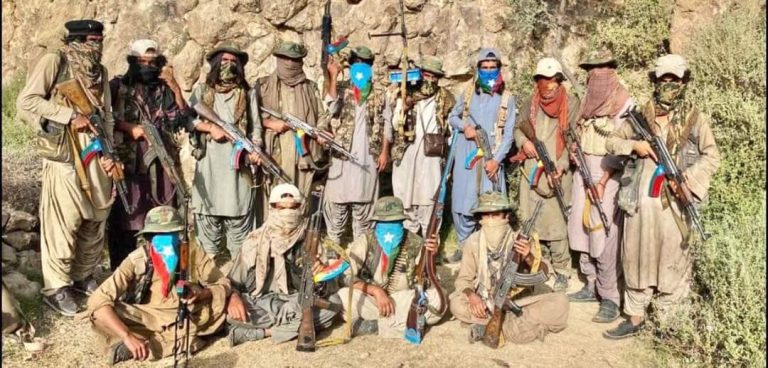
The Baloch Liberation Army (BLA) launched two recent attacks targeting the Pak Army and its collaborators. In a statement released by spokesperson Jeeyand Baloch, the group said that their fighters successfully struck a central military camp in Kharan and a state informant in Quetta, highlighting the ongoing resistance against the atrocities committed by the occupying forces.

According to the BLA, the attack on the military camp, located in the Albatt area of Kharan, involved the use of rockets and heavy weaponry. The spokesperson said that a rocket struck a military checkpoint, resulting in the immediate death of one soldier and inflicting further casualties on the Pak forces. This incident underscores the BLA’s commitment to opposing the relentless military operations that have devastated the Baloch region and its people.

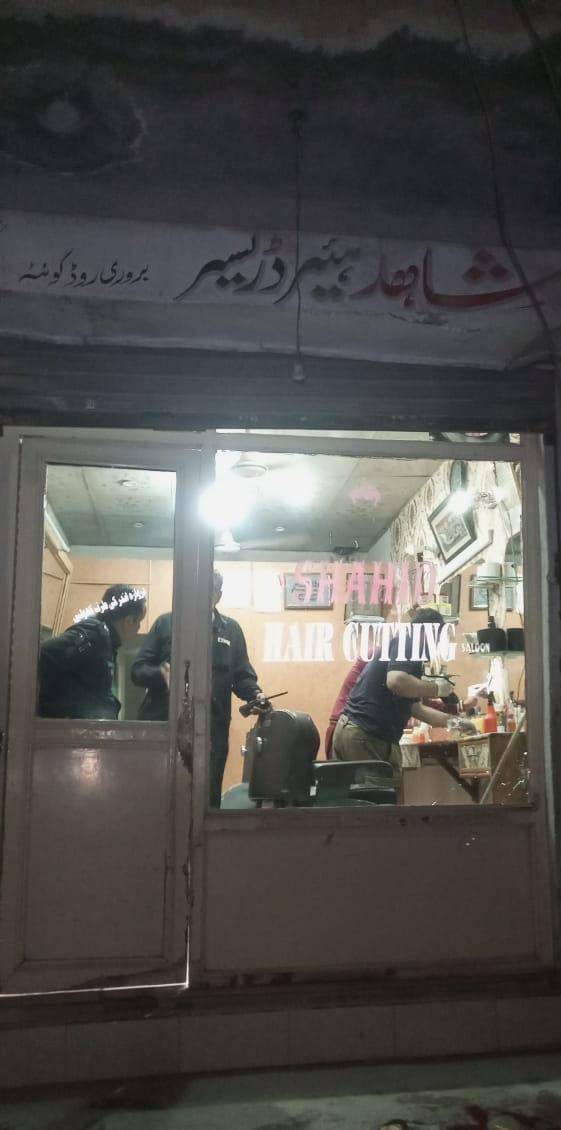
Furthermore, the BLA said that its fighters targeted a collaborator of the Pak military and intelligence agencies in Quetta. The informant, identified as Mujahid from Bahawalpur, Punjab, was reportedly using his barber shop as a cover for espionage activities against the Baloch people.

BLA Responds to Military Aggression

The BLA criticized the occupying- state for utilizing local businesses to facilitate their oppressive regime, as the military is exploiting the civilian population for intelligence-gathering purposes.

The BLA’s attacks serve as a stark reminder of the ongoing struggles faced by the Baloch community, who are subjected to systemic discrimination, military oppression, and violence. The Pak military’s presence in POB has led to widespread human rights violations, including enforced disappearances and extrajudicial killings. These attacks are not only a response to military aggression but also as an essential fight for the rights and dignity of the Baloch people.

This latest series of incidents is part of a broader narrative of resistance against the Paki establishment. The group vowed to continue its struggle until the Baloch community is liberated from an oppressive military occupation.
Islami Jamiat-e-Talaba assaults Baloch students in Punjab University, injures five

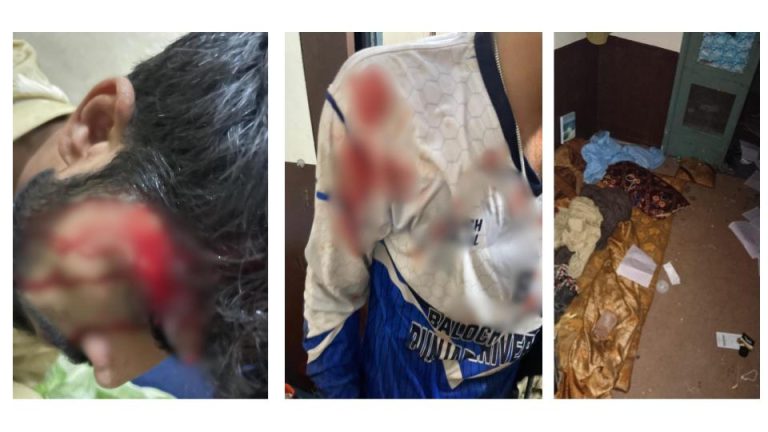
In a disturbing incident at Punjab University in Pakistan, two Baloch students are in critical condition following a violent attack by baton-wielding members of the Islami Jamiat-e-Talaba (IJT). The attack, which left five Baloch students injured, highlights the systemic issues of racial profiling and discrimination faced by the Baloch community in educational institutions in Punjab province.

Reportedly, IJT members not only used sticks but also firearms during the assault. Several Baloch students sustained serious injuries, particularly to their heads and other vital areas. The violent episode occurred in Boys Hostel 8, where IJT members supported by university security forces, targeted Baloch students.

Baloch students, often fleeing the dismal educational landscape in Pak-occupied-Balochistan—where Pak military has left education system in ruins—have no choice but to seek education in Punjab province. Unfortunately, this move exposes them to harassment and violence. The educational system in POB suffers from severe infrastructural deficiencies and a lack of faculty, compelling many students to migrate in search of better opportunities.

The Baloch Council in Lahore has condemned the attack, stating that IJT students were responsible for the violence against their fellow students. However, instead of holding the aggressors accountable, Punjab police arrested more than 20 Baloch students, transferring them to the police station while ignoring the IJT members’ culpability. This raises critical questions: if the clashes were merely student rivalries, why were only Baloch students apprehended? And if maintaining peace and discipline is the goal, why are IJT members allowed to operate above the law?

The recent assault is a stark reminder of the long-standing policies of the Paki establishment, which consistently marginalizes the Baloch community. Recent events clearly demonstrate the targeted harassment that Baloch students endure.

The situation reveals the harsh reality that religious extremist groups like the IJT are, in fact, instruments of the university administration and authorities, used to justify the targeting of Baloch students and those from other marginalized communities, such as Pashtuns. This strategic exploitation perpetuates an environment where Baloch students are treated as second-class citizens, facing both systemic discrimination and outright violence.

BLF attacks Pak Army death squads, executes eleven soldiers

The Baloch Liberation Front (BLF) led an operation in Barkhan, targeting the Pakistan Army-backed “death squads”. In an initial statement issued to the media, Major Gwahram Baloch, spokesperson for the BLF, confirmed that eleven personnel had been killed so far, with intense clashes continuing. The operation, which began two days ago, aims to counter the influence of these militias, terrorizing the Baloch population.

“An operation against the death squads has been ongoing in Barkhan since 4 p.m. yesterday. So far, eleven enemy personnel have been eliminated, and more than a dozen wounded,” said Major Gwahram Baloch. “The operation continues with full force, and further details will be released soon.”

The conflict in Pak-occupied-Balochistan between local resistance groups and the Paki establishment has deep roots, with Baloch nationalist movements fighting for greater autonomy and rights over the province’s resources. Since forceful occupation of POB in 1948, the Pak Army has been using brutal tactics to suppress the Baloch population, including enforced disappearances, extrajudicial killings, and the formation of “death squads.”

BLF Hits Pakistan Army

These militias are funded and backed by the Pak military and intelligence agencies, have been linked to widespread violence, targeting activists, intellectuals, and communities merely suspected of supporting the Baloch independence movement.

Baloch nationalist groups like the BLF have consistently opposed these militias, as they are the instruments of Army terror. These “death squads” operate with impunity, acting as proxies for the Pakistan Army to carry out atrocities that terrorize civilians and silence opposition.

The situation has escalated in recent years as pro-independence groups like the BLF have launched coordinated operations in retaliation for military actions that have devastated the region. Major Gwahram Baloch reaffirmed that the BLF will continue its operations until the Baloch people are free from Pak Army’s oppressive colonial rule.

Hindu man bravely rescues body of blasphemy victim Dr. Shahnawaz Kumbhar in Pakistan

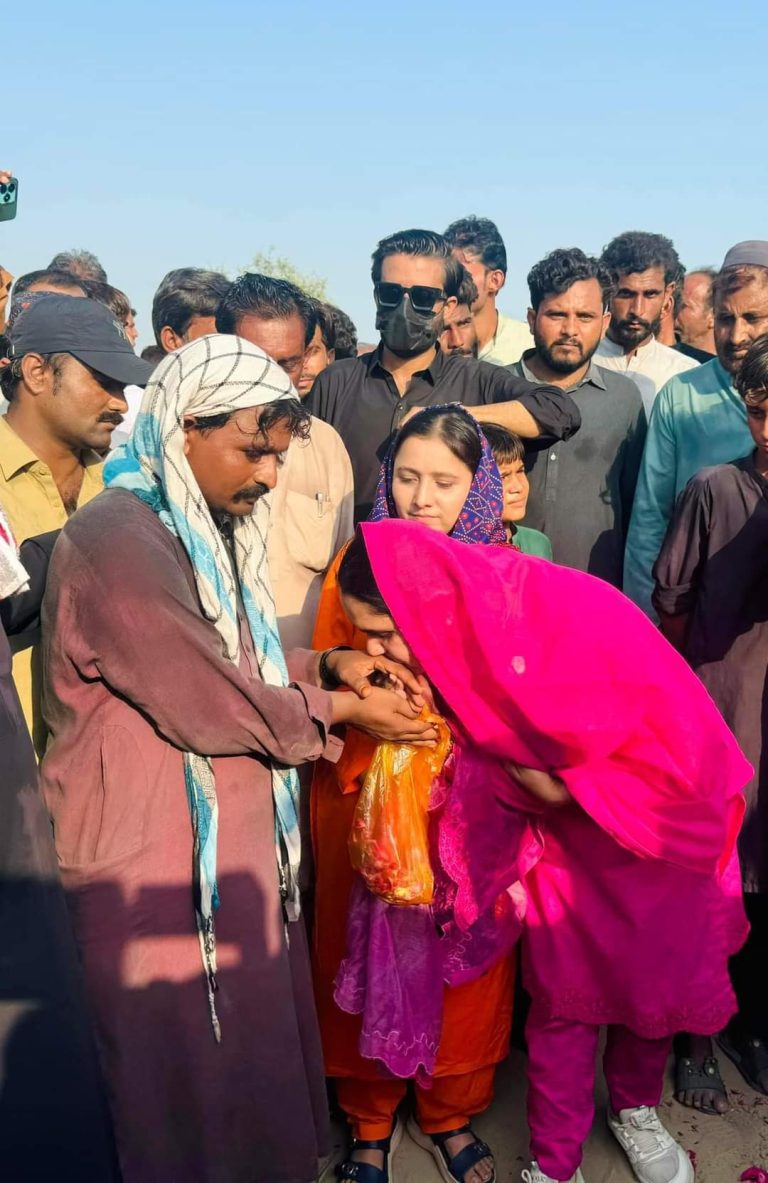
In a heart-wrenching act of courage, Prem Kolhi, a Hindu man, risked his life to save the body of Dr. Shahnawaz Kumbhar, a physician who was killed while in police custody in Mirpurkhas, Pakistan. Dr. Kumbhar, accused of blasphemy, was subjected to a gruesome fate as a mob set his body ablaze. Kolhi’s brave attempt to rescue the burning corpse starkly contrasts the indifference of the Paki establishment towards minorities.

The Sindh Police orchestrated this tragic incident. By allowing the mob to carry out such an act, the police have demonstrated a chilling complicity in the violence against those accused of blasphemy.

Disturbingly, the Sindh Police were celebrated by some community members after the incident, with flowers thrown at officers. This grotesque celebration of violence not only reveals a disturbing attitude towards the rule of law but also underscores the systemic failures of a police force that is supposed to protect all citizens, particularly the vulnerable minorities who are often the targets of religious extremism.

Dr. Kumbhar’s case is emblematic of a dangerous trend in Pakistan, where accusations of blasphemy lead to mob violence and extrajudicial killings. The misuse of blasphemy laws serves as a tool for persecution, creating a perfect hunting ground for religious minorities. In this context, the actions of Prem Kolhi shine as a beacon of humanity against a backdrop of systemic injustice.

Bannu: Public protests erupt following arrest of Jirga member Jamshed Khan

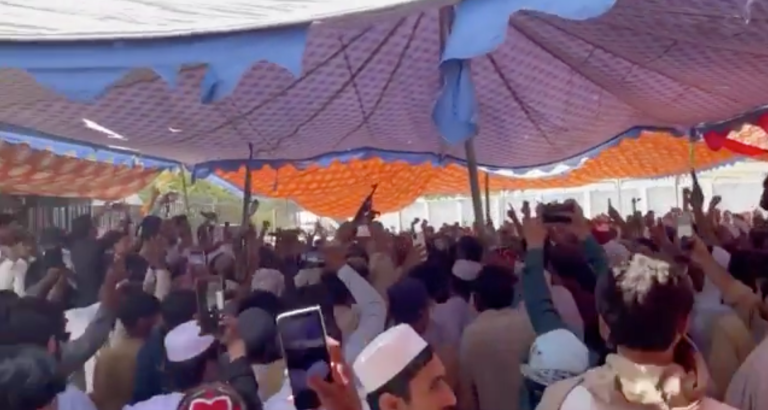
The arrest of Jamshed Khan, a member of the Bannu Aman Jirga, has ignited widespread protests among local police and citizens, highlighting the deep-seated discontent with the Paki establishment and its heavy-handed tactics. The Lucky Marwat Police joined the protests, expressing solidarity in front of Bannu Police with a raucous demonstration that included dancing amid rising dust, a symbolic gesture of defiance against the occupied-authorities.

Jamshed Khan, who was detained in the Bannu police line, was a vocal participant in recent police protests and had previously faced suspension for his activism. His abduction on September 20, by the Cantt Police Station’s Station House Officer (SHO) and Deputy Superintendent of Police (DSP) has sparked outrage, leading to a blockade of the Bannu-Miranshah road by protesters demanding his immediate release.

The local police have begun coordinating with forces from other districts to expand the protests across Khyber Pakhtunkhwa, a broader uprising against the establishment’s oppressive tactics. Furthermore, 11 police officials were fired for disobeying orders exacerbating tensions. Recently, the Pak Army filed an FIR against PTM Chief Manzoor Pashteen ahead of the upcoming Pashtun gatherings.

The recent turmoil underscores the escalating frustration of the Pashtun people in Khyber Pakhtunkhwa, who are marginalized and exploited by the Punjabi elite and the military establishment. Tired of decades of systemic neglect and violence, Pashtuns are rising to demand accountability and justice. The upcoming national gathering of the Pashtun Tahafuz Movement (PTM) on October 11 is poised to be a pivotal event, aiming to shed light on the human rights abuses faced by the community and to call for international attention to their plight.

Since the military’s occupation of the Khyber region in 1947, the Punjabi-Pakistan Army has executed a brutal campaign against the Pashtun population. Masked as counter-terrorism operations, these actions have included indiscriminate shelling of civilian areas, extrajudicial killings, and abductions, leaving communities shattered and traumatized. The military has treated the Pashtun people as mere collateral damage in its quest for control, perpetuating a cycle of violence that has gone unchecked for far too long.

Mob lynching outside Ahmadiyya mosque in Lahore, Pak police stands idle

A radical extremist mob gathered outside the Ahmadiyya Mosque in Islamiya Park, Lahore, as a mob lynching unfolds. Despite police presence, authorities have turned a blind eye to the attack.

The ongoing violence against the Ahmadiyya community, which is classified as non-Muslim by Pakistan’s constitution, underscores the systemic persecution and hate crimes faced by religious minorities in the country. These incidents highlight the precarious and dangerous environment that minority groups endure.

In a recent act of aggression, Pak Army backed-Punjab police conducted a raid on an Ahmadi place of worship. Authorities not only destroyed the minarets but also defaced the Kalima, a sacred Islamic inscription.

This brazen vandalism reflects a broader campaign to marginalize and terrorize the Ahmadi community. This institutionalized persecution by the Paki establishment effectively disenfranchises them.

The failure of Pakistan to intervene and protect its citizens is a grave indictment of its governance. The authorities’ complicity in the ongoing violence reveals a troubling disregard for the safety and rights of religious minorities. In this Islamic Republic, even Muslims are not safe.

Violent land dispute erupts between Shia & Sunni tribes in Kurram; Paki establishment quiet

At least 20 people have been injured and two killed in escalating violence between Shia and Sunni tribes in Kurram district, highlighting a disturbing pattern of sectarian strife and the Pakistan Army’s failure to provide adequate security. Despite the evacuation of bunkers, intermittent firing continues, with reports of three missiles landing in Sadda, Central Kurram, causing significant damage to local infrastructure.

The conflict erupted over a land dispute, further inflamed by demands from Shia Muslims in Parachinar for a blasphemy case against Sunni Muslims in Sadda. The Sunni community has labeled Shias as heretics and insulted revered figures, exacerbating tensions.

Shia residents have long faced insecurity and vulnerability, a direct consequence of the security agencies’ inadequate response to extremist threats. The recurring attacks and violence have claimed numerous innocent lives, leading to rising frustration and anger among the minority Shia population.

The Punjabi Pak Army’s failure to protect its citizens, particularly vulnerable groups like the Shia community, is a significant governance failure. The Army’s inaction in the face of rising sectarian violence reflects the treatment of minorities as second class citizens, leaving them exposed to ruthless terrorists.

Khyber-Pakhtunkhwa: IED attack targets international diplomats in Swat

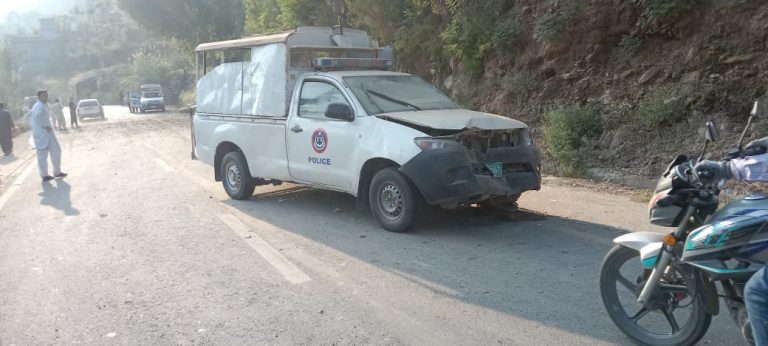
An improvised explosive device (IED) targeted a police vehicle escorting a group of 24 diplomats and their families during an official visit to Swat in the Khyber Pakhtunkhwa province. The attack claimed the life of one police officer and injured three others. The diplomats, who were unharmed in the blast, were on a visit arranged by the Islamabad Chamber of Commerce and Industry (ICCI) in collaboration with the Swat Chamber of Commerce.

Among the diplomats present were high-ranking officials from countries including Rwanda, Bosnia and Herzegovina, Portugal, Tajikistan, Zimbabwe, Turkmenistan, Iran, Ethiopia, Indonesia, Kazakhstan, Vietnam, and Russia. Notably, Russian Ambassador Albert Khorev, who was part of the group, was reported safe but visibly shaken by the explosion.

Deputy Inspector General of Malakand Division, Muhammad Ali Gandapur, confirmed that the explosion was caused by a remote-controlled IED. “The attack targeted the police; no foreigners were hurt,” he said.

Diplomatic security arrangements have come under scrutiny following the attack, with senior officials in Khyber Pakhtunkhwa pointing to a potential lapse in protocol. According to these officials, the ICCI directly coordinated with Malakand Police, bypassing the senior provincial authorities in Peshawar responsible for overseeing diplomatic engagements. Despite these concerns, the foreign office had provided the required No Objection Certificate (NOC) for the mission.

IED Attack on Diplomatic Convoy

The diplomats had arrived in Swat on September 22, as part of a two-day schedule that included visits to local cultural sites, lunch at the White Palace, and a stay at Pearl Continental Malam Jaba Ski Resort. Swat police had deployed 36 officers to ensure the delegation’s security, with police teams and bomb disposal units sweeping the routes. However, despite these measures, the IED attack occurred.

Diplomatic sources revealed that Turkey and Spain had declined to participate in the visit, citing security concerns. While no group has yet claimed responsibility for the attack, Swat and the Malakand division have seen an increase in violent assaults, primarily targeting law enforcement. Most attacks in the region have been attributed to the Tehreek-e-Taliban Pakistan (TTP), a terrorist group that has been active in the area since the breakdown of peace talks, leading to widespread unrest.

The Khyber Pakhtunkhwa occupied government had recently lifted the NOC requirement for foreign tourists in January 2024, but the region remains a hotspot for the Pakistan Army’s inbred terrorists, now turned rogue, with TTP terror attacks defying all security protocols.

This attack showcases how inefficient the Punjabi Pak Army is in its inability to curtail terrorists attacks, while it uses all its might to suppress innocent Pashtuns by abducting and extrajudicially killing them.

Pak Army files FIR against Manzoor Pashteen for organizing Pashtun gathering

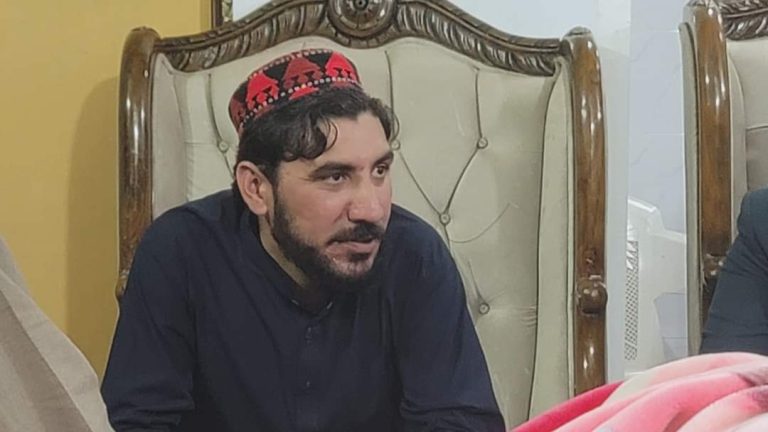
In another display of Pak Army’s authoritarian grip over its tribal regions, police in Orakzai district registered an FIR against Pashtun Tahafuz Movement (PTM) leader Manzoor Pashteen, along with other organizers of a peaceful gathering aimed at rallying support for the upcoming Pashtun Grand Jirga on October 11. The Khyber Pakhtunkhwa (KP) police, operating in the former Federally Administered Tribal Areas (FATA), have once again shown themselves to be mere tools of the unaccountable Pak Army establishment, acting on orders to silence any dissent in the region.

Manzoor Pashteen has emerged as a leader the Paki establishment never anticipated, one who has become a powerful voice for the long-suffering Pashtun community. His calls for Pashtun unity have resonated across KP, where the population has endured decades of exploitation and atrocities at the hands of the Punjabi-Pak military.

Despite the peaceful nature of their protests, Pashtun activists continue to face persecution. Even transport workers in KP have been arrested in recent days. The arrests are part of a larger effort to stifle the growing Pashtun movement.

Pashtuns in KP have reached their breaking point. Tired of the Punjabi elite’s disregard for their lives and livelihoods, the Pashtun people are taking matters into their own hands, demanding accountability for decades of exploitation. The PTM’s national gathering on October 11 will serve as a crucial platform to raise awareness about the human rights violations they have endured and to call for international attention to their plight.

Since the occupation of the Khyber region in 1947, the Punjabi Pak Army has waged a campaign of relentless violence against the Pashtun people. Under the guise of counter-terrorism operations, the Army has engaged in indiscriminate shelling of villages, extrajudicial killings, abductions, and staged encounters, leaving a trail of devastation in its wake. The military has used the region as a battleground for its own interests, treating its inhabitants as collateral damage.

Islamic State Khorasan terrorists kill five Shias in Khyber-Pakhtunkhwa

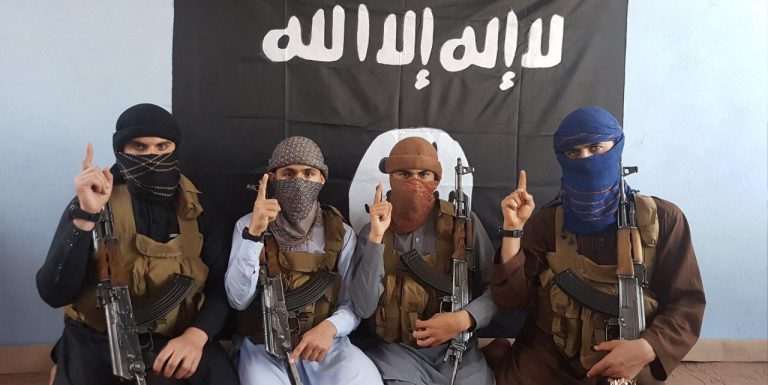
In a brutal attack last week, five people from the Shia community were killed in the Rustam area of Mardan, Khyber-Pakhtunkhwa, when Islamic State Khorasan (IS-K) terrorists targeted their home. While IS-K openly claimed responsibility for the killings and published images of the aftermath in its propaganda magazine Al-Naba, local police have downplayed the incident, attributing the deaths to a lightning strike that allegedly caused the house to catch fire.

ISKP’s message, shared alongside a photo of the destroyed home, asserted that the attack was deliberately aimed at the Shia sect, a community increasingly under siege by extremist elements in Pakistan and Afghanistan. Despite this, Khyber Pakhtunkhwa police have denied the group’s claim, insisting that the deaths were caused by natural forces, not a terrorist attack. Authorities are still awaiting the post-mortem report.

The Islamic State’s claim, however, comes on the heels of a series of escalated attacks on Shia communities in the region. Just days earlier, ISKP terrorists massacred Shi’ite pilgrims in central Afghanistan, releasing images of the bloody aftermath. Since the Taliban’s takeover in 2021, the Sunni extremist group has intensified its campaign of violence against the Shia minority, particularly the Hazara community, which has long been persecuted in the region.

The Pak authorities failure to acknowledge these attacks not only undermines the safety of minority groups but also reveals the occupied-state’s inability to control the rising influence of ISKP.