
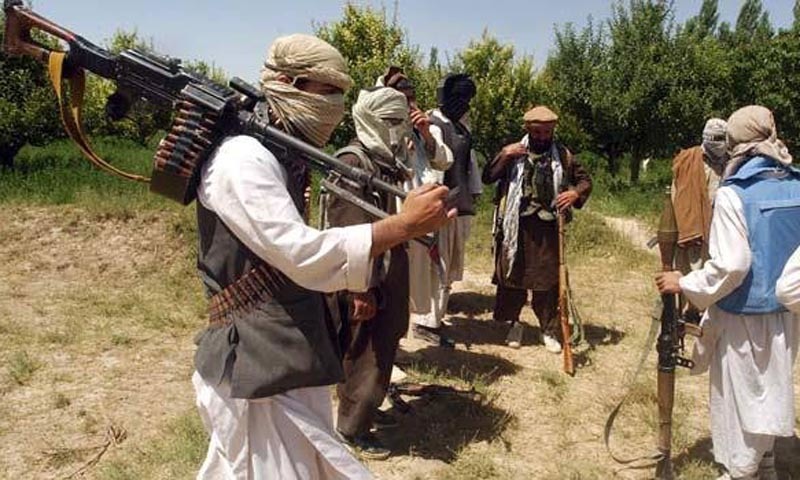
The recent designation of The Resistance Front (TRF) as a Foreign Terrorist Organization (FTO) marks a significant development in India’s ongoing battle against Pakistan-sponsored terrorism. The Resistance Front (TRF), widely recognized as a proxy of the proscribed Pakistan-based outfit Lashkar-e-Taiba (LeT), carried out a horrific terror attack in Pahalgam, resulting in the tragic loss of 26 lives. This gruesome incident triggered a calibrated and multi-domain response from New Delhi, signaling a robust assertion of national will through the lens of Grey Zone warfare.
India’s retaliatory measures spanned a comprehensive spectrum-military retribution through Operation Sindoor, economic signalling by invoking clauses to suspend the Indus Waters Treaty, global information operations to expose Pakistan’s duplicity, and finally, diplomatic manoeuvres that led to TRF’s inclusion in the U.S. Department of State’s Foreign Terrorist Organization (FTO) list. These layered responses underscore a notable evolution in India’s national security doctrine a shift from reactive posturing to proactive deterrence.
Decades of Proxy War: A Brief Rewind
Since 1989, India has endured a relentless proxy war waged by Pakistan, resulting in thousands of deaths among civilians and security personnel. Lacking the capability to match India in conventional military terms, Islamabad adopted an asymmetric strategy. This included cross-border terrorism, radicalization networks, and the use of non-state actors as instruments of state policy.
From the 1999 Kargil War, the 2001 Indian Parliament attack, the 2008 Mumbai carnage, to the 2016 Pathankot incident, these episodes exemplify the trauma inflicted by Pakistan’s proxy strategy. For long, New Delhi’s responses were restrained, shaped largely by concerns over narrow conventional differential, nuclear escalation and international pressure.
Pakistan banked on the perceived limitations of India’s conventional response, believing that nuclear deterrence, coupled with strategic collusion with China, would deter India from crossing the Line of Control (LOC) or engaging in decisive retaliation.
Post-2014 Shift: Building Capacity and Strategic Resolve
The emergence of a strong central government in 2014 catalyzed a paradigm shift. India began steadily enhancing its capabilities across the DIME-PT (Diplomatic, Informational, Military, Economic, Political, and Technological) framework. A new national security posture was silently taking shape, one that married intent with capacity.
This transformation was first visible after the 2016 Uri terror attack. Within less than two weeks, Indian Special Forces conducted surgical strikes across the LoC, targeting terror launch pads. It was a pivotal moment—the first time India publicly acknowledged a cross- border counter-terror operation. When Pakistan failed to heed that signal and responded with the Pulwama attack in February 2019, India upped the ante with the Balakot airstrike, a deep-penetration strike inside Pakistan’s Khyber Pakhtunkhwa province, targeting a Jaish-e-Mohammed training facility. The myth that India would never breach Pakistani airspace was shattered.
The high-stakes standoff that followed, particularly the capture and prompt return of Wing Commander (now Group Captain) Abhinandan Varthaman, demonstrated the maturity of India’s political and military will and the rising cost of aggression for Pakistan.
2019-2020: Strategic Reorientation in Full Display
The abrogation of Article 370 and Article 35A in August 2019 was another strategic landmark. By fully integrating Jammu and Kashmir into the Indian Union, India signalled that any external interference would be met with constitutional, political, and military resolve. Predictably, the move provoked concern in both Islamabad and Beijing.
China’s provocation in Eastern Ladakh in May 2020 led to the deadly Galwan Valley clashes. However, the Indian Army’s response that was resolute, professional and proportionate, demonstrated the maturity of India’s new war doctrine. India stood firm on its territorial claims while diplomatically isolating Beijing and boosting military readiness along the Line of Actual Control (LAC).
2025 and Beyond: Bharat’s Expanding Military and Diplomatic Arsenal
By 2025, Bharat has matured into a formidable power with both conventional and sub-conventional capabilities. The armed forces have significantly enhanced their prowess across land, air, maritime, space, and cyber domains. Indigenous advancements in defense technology have allowed India to conduct precise, high-impact Military Operations Other Than War (MOOTW).
Operation Sindoor, a landmark operation post-Pahalgam attack, showcased India’s capability to conduct integrated, multi-domain retaliation. Not only did it punish the perpetrators, but it also served as a showcase for Indian-made weapons and systems-prompting interest from several foreign governments seeking similar capabilities.
The strategic signaling was clear: Terrorism against India will be treated as an act of war, the response will come at a time, place, and scale chosen by New Delhi.
Global Support and Strategic Legitimacy
India’s diplomatic push in the wake of the Pahalgam tragedy was aimed not just at isolating Pakistan, but at building global consensus around the dangers of hybrid terrorism. The United States’ designation of The Resistance Front (TRF) as a Foreign Terrorist Organization (FTO) is a direct consequence of that effort.
This move carries significant implications:
* It delegitimizes TRF and its handlers internationally.
* It allows India and its partners to block funding, freeze assets, and prosecute those linked to the group.
* It strengthens India’s legal and military justification for future counter-terror operations—even across borders and more lethal than the Operation Sindoor.
While Pakistan may not be explicitly named, the intent is unmistakable: India now reserves the right to strike sponsors and enablers of terror with impunity.
Conclusion: A New Normal in Indian National Security
The listing of The Resistance Front (TRF) as a Foreign Terrorist Organization is not just a symbolic win; it’s a culmination of years of quite capacity-building, political will, and strategic recalibration. It reflects Bharat’s emergence as a nation that no longer tolerates asymmetric coercion. India’s responses now operate across the full continuum of national power-military, economic, diplomatic, informational, and technological.
While military operations may be temporarily paused, the broader campaign to neutralize threats, expose enablers, and rewrite the rules of engagement continues. As Prime Minister Modi asserted, India will respond to any terror attack not with passivity but with calibrated, decisive force on its own terms. The message is clear: Bharat will not just defend itself—it will deter, disrupt, and dominate.