
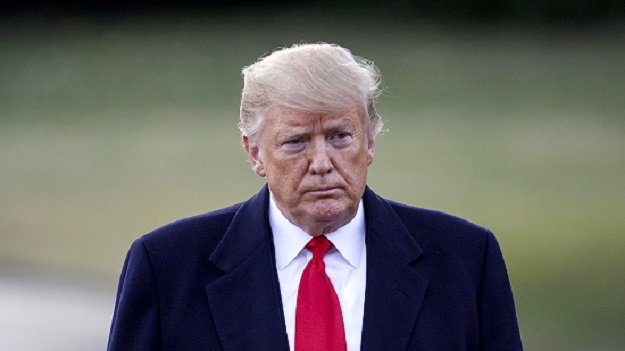
Donald Trump’s words are never just words. From the campaign trail of 2015 to his presidential comeback in 2025, his rhetoric has doubled as strategy—part theater, part threat, and part transaction. Behind the nicknames, public insults, and boasts lies a coherent method: Re-framing America’s global role as conditional, monetized, and un-apologetically self-serving. This is not diplomacy in the traditional sense. It is disruption as doctrine. And the world is still trying to decide whether Trump’s style is reckless improvisation—or controlled chaos.
The Timeline of Trump’s Tongue
2015–2016: The Insurgent
” Mexican government was not sending the best people across the U.S. border, but instead criminals, drug traffickers, and rapists”, “I alone can fix it.” “Mexico will pay for the wall.”
The outsider demeans Mexico, paints elites as traitors, and himself as America’s lone saviour. Fear + populism = political insurgency.
2017: Institutional Shock
“Enemy of the people.” “Travel ban to protect the Nation.”
Trump pits himself against the press, the courts, and tradition. It is confrontation as a governing philosophy.
2018: Hardball Abroad
“Trade wars are good and easy to win.” “Germany is totally controlled by Russia.”
Allies mocked, adversaries threatened. Ridicule becomes a tool of leverage.
2019: Cornered and Combative
“Perfect call.” “No collusion.”
Trump stopped the aid to Kyiv and pressurized Zelensky to investigate Joe Biden and Hunter Biden. But it boomeranged and first call for impeachment was made. The impeachment era transforms Trump into victim, judge, and executioner—often in the same sentence.
2020: Pandemic Pivot
“China virus.” “Wartime president.” “Historic Abraham Accords.”
Blame shifted abroad, credit hoarded at home. Crisis becomes campaign fodder.
2021–2024: Campaign Without Office
“Stolen election.” “If NATO doesn’t pay, Russia can do whatever they want.”
Defeat fuels grievance. His foreign policy fuses coercion with populist revenge politics.
2025: The Comeback
“Universal baseline tariffs.” “Deep meditation after Operation Sindoor.”
India, Pakistan, China, Russia—Trump talks of peace while wielding economic coercion. Transactional diplomacy dressed up as statesmanship.
Trump’s Country Playbook
China: From “China is raping our country” in 2016 during campaign to “Xi is a very good man…we have a great chemistry” to “China virus.” Charm flips to hostility when trade is involved.
Russia: Alternates between threats of “large-scale sanctions” and warm praise for Putin. Affection as bargaining chip.
North Korea: From “Little Rocket Man” to “We fell in love.” Oscillation as leverage.
Iran: JCPOA “worst deal ever.” From “total obliteration” to “limited strike” in 48 hours. Flexibility paired with fury.
Mexico: “They’re not sending their best.” Fear as border policy. The wall as symbol of sovereignty.
NATO/EU: From “obsolete” to “pay their fair share.” Alliances reduced to financial contracts.
India: From “America loves India” to “dead economy.” Praise, threats, and posturing over tariffs, Russia ties, and border crises. India cast as swing state in U.S. strategy.
Pakistan: “Nothing but lies and deceit” (2018) to “We have never been closer” (2019). Praise shifts from Imran Khan to General Munir. Civilian governments dismissed; military flattered.
Institutions: UN = “a club for people to have a good time.” WHO = “China-centric.” Multilateralism mocked as irrelevant.
The Pattern Behind the Chaos
Strip away the noise and a set of patterns emerge.
Transactional Nationalism: Alliances aren’t about values—they’re about money.
Leverage by Shock: Outbursts rattle the room, forcing others onto the defensive.
Strongman Affinity: Flattery for authoritarians, disdain for bureaucrats.
Policy as Personal Theater: Successes are his alone; failures blamed on enemies.
Perpetual Campaign: Every crisis folded into a running battle against betrayal.
India as Swing State: Alternating praise, criticism, and pseudo-mediation reveal India’s central role in Trump’s triangular balancing act with China, Russia, and Pakistan.
Prognosis: What the World Should Expect
Trump’s rhetoric is not accidental static—it is a strategy of disruption. It unsettles, resets baselines, and monetizes alliances. If 2016–2024 was a test run, 2025 is his full-scale rollout. Expect the following:
Alliances Will Be Monetized: NATO and others must pay up—or face abandonment rhetoric.
Trade as Weapon: Tariffs as tools of war, with India and China in his crosshairs.
Middle Powers Rise: India, Gulf states, Turkey—opportunities to bypass Washington’s old multilateral structures and cut direct deals.
South Asia on Edge: Trump will avoid entanglement but exploit India–Pakistan and India–China tensions to project himself as indispensable.
Russia Question: He will mix praise for Putin with warnings to India, trying to drive a wedge between New Delhi and Moscow.
Trump’s rhetoric is not mere bluster. It is a calculated method of disruption—one that monetizes security, weaponizes trade, flatters strongmen, and unsettles institutions. For allies and adversaries alike, the message is clear: under Trump, diplomacy is not partnership. It is a deal—or a debt.